Why Geo Specific Keyword Targeting Is the Fastest Path to Local Customers
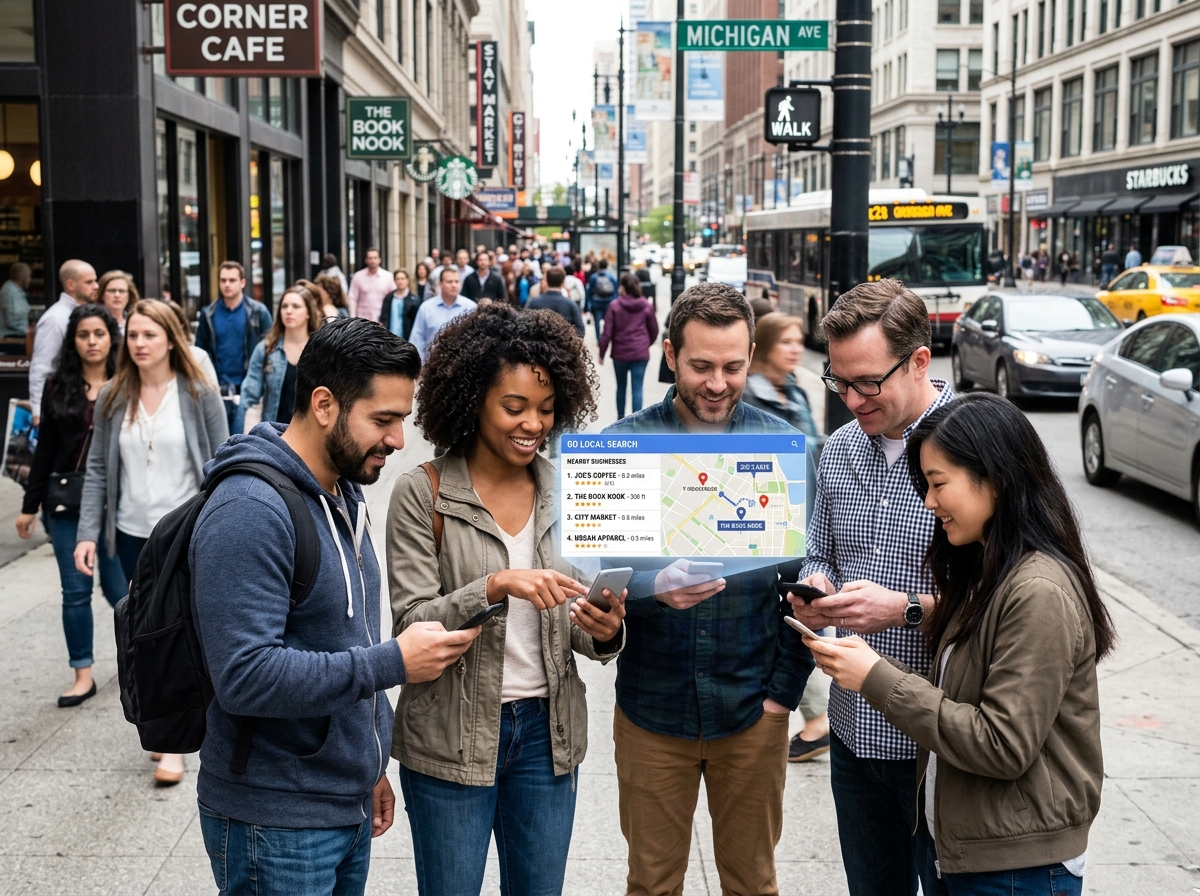
Geo specific keyword targeting is the practice of optimizing your website and ads for search terms that include a specific location — so your business shows up when nearby customers are ready to buy.
Here’s a quick breakdown of what it involves:
- What it is: Adding location modifiers (city, neighborhood, “near me”) to your core service keywords
- Why it works: Local searchers have higher buying intent than general searchers
- How it helps: Drives more calls, visits, and leads from people already in your area
- Key stat: 76% of people who search for something nearby on their phone visit a business within 24 hours — and 28% make a purchase
Think about the last time you searched for something like “emergency plumber near downtown” or “best coffee shop in Monroe.” You weren’t just browsing — you were ready to act. That’s exactly the kind of searcher geo specific keyword targeting is designed to capture.
For small businesses competing against bigger brands with larger budgets, local search is the great equalizer. You don’t need to rank nationally. You just need to rank where your customers are.
I’m Rob Dietz, founder of the Dietz Group and a Google Ads Search Partner with over 18 years of digital marketing experience — and geo specific keyword targeting is one of the most powerful (and underused) strategies I’ve seen small businesses use to consistently win more local leads. This guide walks you through everything you need to know to put it to work for your business.
Defining Geo Specific Keyword Targeting and Its Local SEO Impact
To understand why geo specific keyword targeting is a game-changer, we first have to look at how search engines “think.” When a user types a query into Google, the algorithm isn’t just looking for keyword matches; it’s looking for relevance. For a local business, relevance is almost always tied to geography.
Geo-modifiers are the specific words added to a search term to ground it in a physical place. These can be as broad as a state or as narrow as a zip code. When you optimize for these, you are signaling to search engines exactly where you operate. This is a core pillar of Local SEO vs National SEO. While national SEO focuses on broad informational terms, local SEO uses geographic signals to capture high-intent traffic within a specific radius.
Search engines determine a user’s location through several sophisticated signals:
- IP Addresses: The digital “home address” of a computer or router.
- GPS Data: Highly precise coordinates from mobile devices.
- Wi-Fi Signals: Nearby networks that help triangulate a user’s position even indoors.
- Search History: Previous queries that indicate a user’s frequent locations.
By understanding What Are Geo-Targeted Keywords In Seo?, we can see that these terms are designed to bridge the gap between a business’s physical location and a user’s immediate need. When someone searches for a “dentist in Monroe,” they aren’t looking for a blog post about dental hygiene; they are looking for a chair to sit in.
Mastering Hyperlocal Geo Specific Keyword Targeting
If city-level targeting is the foundation, hyperlocal targeting is the skyscraper. In many competitive markets, simply targeting a city name is no longer enough. We have seen a significant shift toward “Micro-neighborhoods” and specific “Intent pockets.”
Hyperlocal targeting involves using neighborhood names, landmarks, or even street intersections. For example, instead of just targeting “Charlotte,” a business might target “South End” or “NoDa.” This matters because Will Local SEO Make a Difference for a Small Business? often hinges on being the most relevant result for a very specific area.
Entity mapping is another advanced concept we use. This involves connecting your business to local entities that Google already recognizes, such as famous parks, stadiums, or transit hubs. When you mention your proximity to a well-known landmark, you strengthen your local “entity” status in the eyes of the algorithm. This increases “decision velocity”—the speed at which a customer decides to choose you because you are the most convenient, nearby option.
Strategic Types of Geo-Targeted Keywords
Not all geo-targeted keywords are created equal. To build a robust strategy, we categorize them into levels of granularity:
- City-Level Keywords: These are the most common (e.g., “HVAC repair Monroe”). They offer high volume but higher competition.
- Neighborhood Names: These capture users who identify more with their specific community than the city at large.
- Radius/Proximity Targeting: This involves “near me” style queries. Interestingly, Google often interprets “near me” based on the user’s real-time location, but having your city and neighborhood names on the page helps Google confirm you are indeed the “near” option.
- Service Area Businesses (SABs): If you don’t have a storefront but travel to customers, your keywords should reflect the entire region you cover, often broken down by county or major suburb.

Broad City vs. Hyperlocal Conversion Rates
| Keyword Type | Search Volume | Conversion Rate | Intent Level |
|---|---|---|---|
| Broad (“Plumber”) | Very High | 1-2% | Research/General |
| City (“Plumber Monroe”) | Medium | 5-10% | High Intent |
| Hyperlocal (“Emergency Plumber South End”) | Low | 15-30% | Immediate Need |
As the table shows, while hyperlocal terms have lower search volume, their conversion rates are often 5x to 10x higher. You are trading quantity for quality—and in lead generation, quality wins every time.
Optimizing On-Page Elements for Geo Specific Keyword Targeting
Once you have identified your keywords, you must place them strategically. This isn’t about “keyword stuffing” (which will get you penalized); it’s about natural integration.
- Title Tags & Meta Descriptions: These are your digital storefront windows. Include your primary service and primary city here.
- URL Structure: If you have multiple locations, use a structure like
dietzgroup.us/monroe-nc/. - Image Alt-Text: Describe your images using local context, such as “Our team working on a roof in Monroe, NC.”
- Local Schema: This is a piece of code that tells search engines exactly what your business is. Using Schema.org LocalBusiness markup allows you to “speak” directly to the algorithm, providing your address, phone number, and coordinates in a format it loves.
Don’t forget that your website and your Google Business Profile (GBP) must work in harmony. Following 3 Tips to Optimize Your Google Business Profile ensures that the location signals on your site match the data Google has on its maps.
How to Conduct and Implement Geo-Specific Keyword Research
Effective research is the difference between guessing and growing. We recommend a mix of high-tech tools and “old-school” community knowledge.
The Tech Stack:
- Google Keyword Planner: Great for finding volume and seeing how much competitors are willing to pay for local terms.
- Ahrefs & Semrush: These tools allow you to “spy” on your local competitors. See which neighborhood-specific terms are driving traffic to their sites and close the gap.
The “Human” Stack:
- Community Slang: Do locals call a certain area “The Crossroads” or “The Bottoms” even if it’s not on an official map? Use those terms.
- Customer Conversations: Listen to how your customers describe their location. Do they say they live “near the high school” or “just past the old mill”? These phrases are gold for geo specific keyword targeting.
When you build out your site, ensure you have a dedicated landing page for each major service area. This is where What is NAP and Why It’s Critical for Local SEO in the Age of AI comes into play. NAP stands for Name, Address, and Phone number. It must be 100% consistent across your website, your GBP, and every local directory.
Advanced Tactics: PPC, AI, and Multi-Location Strategies
For businesses that want results faster than organic SEO can provide, Google Ads Location Targeting is the answer. However, many people set it and forget it, which wastes money.
One of the most important settings is Presence vs. Interest.
- Presence: Only shows ads to people physically in your target area.
- Interest: Shows ads to people searching about your area (e.g., someone in New York searching for “hotels in Monroe”).
For most local service businesses, “Presence” is the safer bet to avoid paying for clicks from people who aren’t actually nearby. You can also implement 9 essential geotargeting tactics for Google Ads, such as weather-based bidding. If you’re an HVAC company, you can automatically increase your bids when a heatwave hits Monroe.
AI and the Future of Geo-Targeting
Artificial Intelligence is changing the landscape of AI and Local SEO GBP management. Generative AI can help you create unique descriptions for dozens of location pages, but it must be used carefully to avoid “thin content” penalties.
Furthermore, “Generative Engine Optimization” is the new frontier. As search engines move toward AI-driven answers (like Google’s SGE), they are looking for “entities” and “authoritative local proof.” This is Why Combining Google Ads and Local SEO is a Good Strategy; the data from your paid ads can help inform your organic strategy by showing you exactly which local keywords actually result in phone calls.
Frequently Asked Questions about Geo-Targeting
How do I avoid duplicate content penalties on location pages?
This is the biggest fear for multi-location businesses. If you have 10 pages for 10 different towns, you cannot just “copy and paste” the text and change the city name. Google’s “Doorway Page” algorithm will catch this.
To avoid this, we recommend:
- Unique Testimonials: Feature reviews from customers specifically in that town.
- Local Imagery: Use photos of your team working in front of local landmarks or on recognizable streets.
- Specific Directions: Write out custom driving directions from local landmarks.
- Regional Data: Mention specific local issues, such as “How Monroe’s red clay affects your foundation” vs. a generic foundation repair pitch.
What is the difference between geo-targeting in organic SEO vs. paid ads?
Organic SEO is a long-term play. It relies on static keyword optimization, backlinks, and authority building. You can’t “turn it on” instantly.
Paid ads (PPC), however, allow for dynamic IP delivery. You can tell Google, “Only show this ad to people within a 5-mile radius of my Monroe office between 9 AM and 5 PM.” You can also use Local Inventory Ads to show users that a specific product is in stock at your physical location right now. When deciding SEO vs PPC – Which Should You Use?, the answer is usually “both” to maximize your footprint on the search results page.
How can I measure the ROI of my geo-targeted efforts?
You can’t manage what you don’t measure. We use a combination of tools to track performance:
- Call Tracking: Tools like CallRail allow us to use unique phone numbers for different location pages. This tells us exactly which city page is driving the most phone calls.
- Heatmaps: Services like Hotjar show us where users are clicking on our local pages. Are they looking for the map? The “Request a Quote” button?
- UTM Parameters: These are small snippets of code added to URLs in your Google Business Profile and ads so you can see exactly where a lead came from in Google Analytics.
- Store Visits: For businesses with physical locations, Google can actually track (anonymously) when someone who saw your ad later walked into your store.
Conclusion
The world of search is becoming increasingly localized. As mobile search and voice search (like “Siri, find a mechanic near me”) continue to dominate, geo specific keyword targeting is no longer optional—it’s the lifeblood of local business growth.
At Dietz Group, we specialize in helping businesses in Monroe and beyond dominate their local markets. Whether it’s through our Local SEO Services for Small Businesses or high-ROI Google Ads campaigns, our goal is to ensure that when your neighbors are looking for help, they find you first.
The future of local search is hyperlocal, AI-driven, and incredibly precise. Don’t let your business get lost in the noise of broad, national keywords. Start targeting the customers who are literally right outside your door. Ready to win your neighborhood? Let’s get to work.