What Is Google Ads Management (And Why It Matters for Your Business)
Google Ads Management is the ongoing process of setting up, optimizing, and monitoring paid advertising campaigns on Google to maximize return on your ad spend.
Here’s a quick overview of what it covers:
| Area | What It Means |
|---|---|
| Campaign Setup | Creating search, display, shopping, or video ad campaigns |
| Keyword Research | Finding the right search terms your customers use |
| Bid Management | Controlling how much you pay per click |
| Ad Copy & Testing | Writing ads and testing which versions perform best |
| Performance Tracking | Measuring results like leads, calls, and sales |
| Ongoing Optimization | Refining campaigns to improve ROI over time |
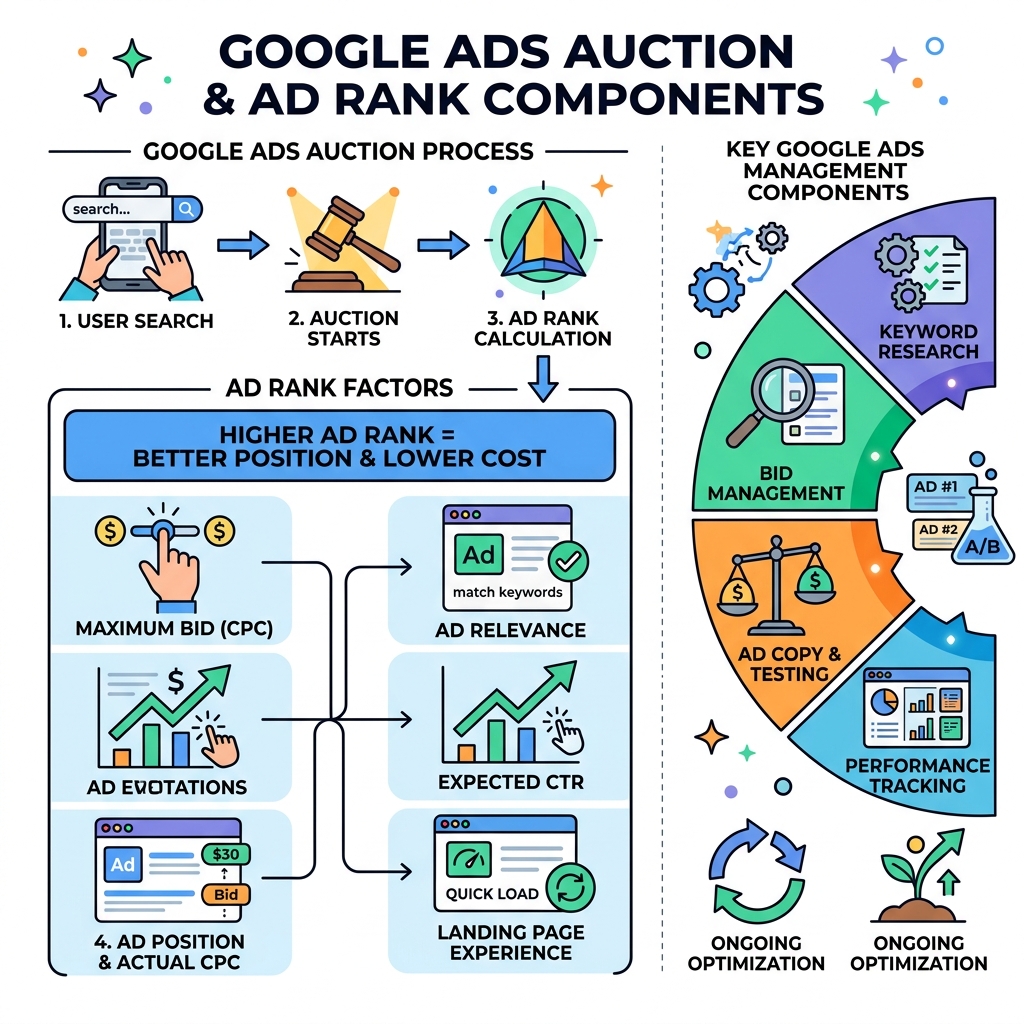
Google Ads works by entering your ads into a real-time auction every time someone searches on Google. Your ad’s position is determined by your bid and the quality of your ad — not just how much you spend.
The results can be significant. Businesses earn an estimated $8 in profit for every $1 spent on Google Ads, and the average conversion rate across industries sits at 4.2% — climbing even higher in certain sectors.
But here’s the catch: Google Ads is easy to start and hard to master. Without the right strategy, your budget can disappear fast with little to show for it.
I’m Rob Dietz, founder of Dietz Group and a Google Ads Search Partner who has been managing Google Ads campaigns since 2008 — long before most businesses even knew what Google Ads management was. In this guide, I’ll walk you through everything you need to know, from the basics to advanced strategies, so you can make every dollar count.
Core Components of Effective Google Ads Management
To succeed in paid search, you can’t just throw a bunch of keywords into an account and hope for the best. Effective Google Ads Management requires a disciplined approach to structure and optimization. Think of your account like a house: if the foundation is shaky, the whole thing will eventually come tumbling down.
Campaign Organization and Hierarchy
The way you structure your account determines how efficiently you can control your budget and message. A well-structured account usually follows a logical hierarchy:
- Account: Your top-level home for all campaigns.
- Campaigns: Where you set your daily budget and targeting (like geographic location).
- Ad Groups: Sub-sections within a campaign that contain specific keywords and ads.
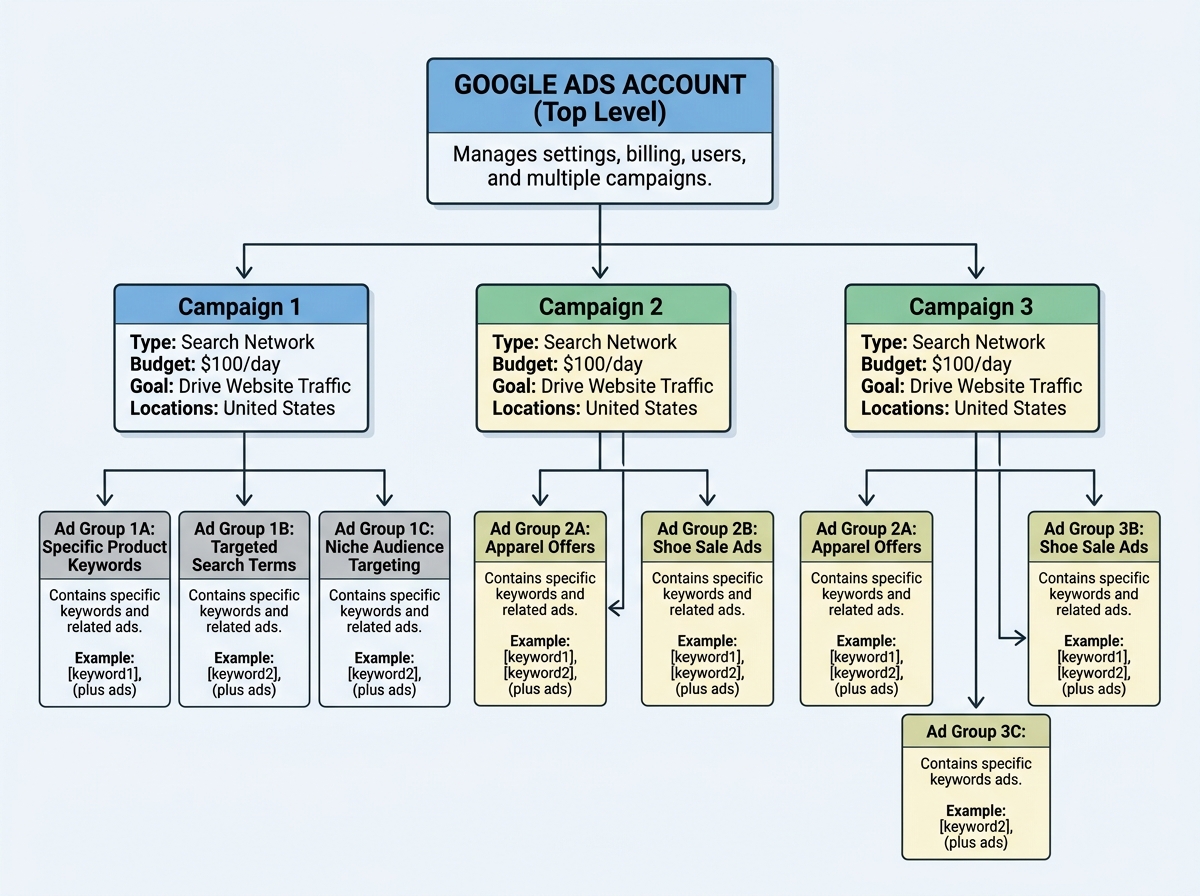
By organizing campaigns by product category or service type, we ensure that the ads people see are highly relevant to what they searched for. For a deeper dive into these mechanics, check out our guide on What is PPC and How Does it Work?.
Keyword Research and Negative Keywords
Keywords are the bridge between a customer’s problem and your solution. We use tools like the Google Keyword Planner to find high-intent terms—words that indicate someone is ready to buy right now.
However, knowing what not to show up for is just as important. Negative keywords prevent your ads from appearing for irrelevant searches (e.g., if you sell “luxury watches,” you might add “free” or “repair” as negatives). This saves your budget for the clicks that actually matter.
Ad Copy Creation and A/B Testing
Your ad copy is your digital storefront. It needs to be compelling, include a clear call to action (CTA), and highlight your unique selling points. But even the best writers don’t get it right 100% of the time. That’s why we use A/B testing—running two versions of an ad simultaneously to see which one generates more clicks and conversions. This iterative process is a hallmark of professional Google Ads Management.
Quality Score and Landing Page Optimization
Google doesn’t just care about your money; they care about the user experience. They assign a Quality Score (rated 1-10) to your keywords based on ad relevance, expected click-through rate, and landing page experience. A high Quality Score can actually lower your cost-per-click (CPC) and improve your ad position.
If your ad promises “Emergency Plumbing” but your landing page talks about “Kitchen Remodeling,” your Quality Score will tank. We focus on ensuring the “post-click” experience is seamless. For local businesses, this relevance is exactly How Google Ads Can Supercharge Local Service Businesses by connecting them with nearby customers at the exact moment of need.
Advanced Strategies for Google Ads Management Success
Once you have the basics down, it’s time to look at the advanced tactics that separate the amateurs from the pros. In the modern era of Google Ads Management, this means embracing AI and sophisticated data attribution.
Audience Targeting and Remarketing
Keywords tell us what people are looking for, but audiences tell us who they are. We can target people based on their interests, demographics, or even their previous interactions with your website.
Remarketing is one of the most effective tools in our arsenal. Have you ever visited a website and then seen their ads follow you around the internet? That’s remarketing. It keeps your brand top-of-mind for people who didn’t convert on their first visit. But Where Do Google Display Ads Appear? They show up on millions of websites, news pages, and blogs across the Google Display Network, ensuring your message reaches your audience wherever they hang out online.
Conversion Tracking and Data Attribution
If you aren’t tracking conversions, you’re flying blind. We implement “pixels” and tracking codes to see exactly which keyword or ad led to a phone call, form submission, or sale.
However, the path to purchase is rarely a straight line. A customer might click a search ad on Monday, see a display ad on Wednesday, and finally buy after clicking an organic search result on Friday. This is why Why Clicks and Impressions Aren’t the Most Important Metrics in Your PPC Analytics. We look at the “big picture” of ROI and how different channels work together.
Optimizing Bidding Strategies in Google Ads Management
In the early days, we managed every bid manually. Today, we use Smart Bidding—a subset of automated bidding strategies that use Google’s AI to optimize for conversions in every single auction.
- Target CPA (Cost Per Acquisition): You tell Google how much you’re willing to pay for a lead, and it adjusts bids to get as many as possible at that price.
- Target ROAS (Return on Ad Spend): Ideal for e-commerce, this focuses on getting the highest possible revenue for your budget.
- Maximize Conversions: Google spends your budget to get the highest volume of conversions possible.
- Manual Bidding: Still useful for new accounts with limited data where we want total control.
Understanding these nuances is key to Understanding Google PPC and Pay-Per-Click Advertising. At Dietz Group, we often use a “portfolio” approach, grouping similar campaigns together to give Google’s AI more data to learn from.
Scaling Performance with Google Ads Management Tools
To manage ads at scale, we use a variety of high-tech tools:
- Performance Max: An AI-driven campaign type that serves ads across all of Google’s “real estate” (Search, YouTube, Gmail, etc.) from a single campaign.
- Demand Gen: Focuses on visually engaging ads on YouTube and Discover to generate interest before someone even searches for you.
- Automated Rules: We set “if-then” statements (e.g., “If an ad has 0 conversions and has spent $100, pause it”) to monitor accounts 24/7.
These tools help answer the question: What Do Google Ads Do? They provide a multi-layered approach to capturing attention and driving revenue through every stage of the funnel.
Understanding Costs and Agency Partnerships
One of the most common questions we get is: “How much does Google Ads Management cost?” The answer depends on your goals and the complexity of your account.
Pricing Models and Ad Spend
Most agencies use one of three pricing models:
- Percentage of Ad Spend: Common for large accounts.
- Flat Monthly Fee: Great for small businesses with predictable budgets.
- Performance-Based: The agency gets a cut of the leads or sales generated.
It’s important to distinguish between your ad spend (the money you pay directly to Google for clicks) and the management fee (the money you pay an expert to run the campaigns).
SEO vs. PPC: The Dilemma
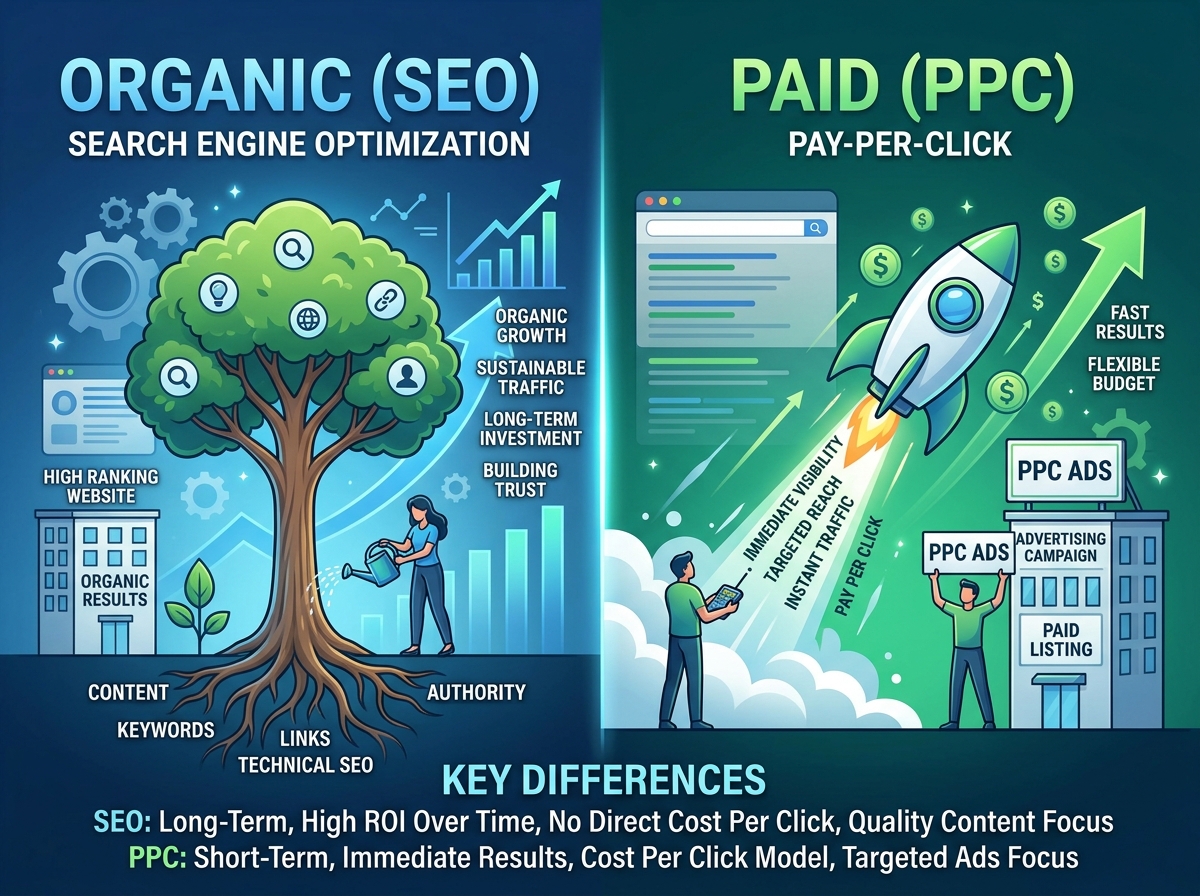
Many businesses wonder if they should invest in organic SEO or paid ads. The truth is, they work best together. PPC offers instant results, while SEO builds long-term equity. We often help clients in Solving the SEO vs PPC Dilemma by using ads to test which keywords convert best before we spend months trying to rank for them organically.
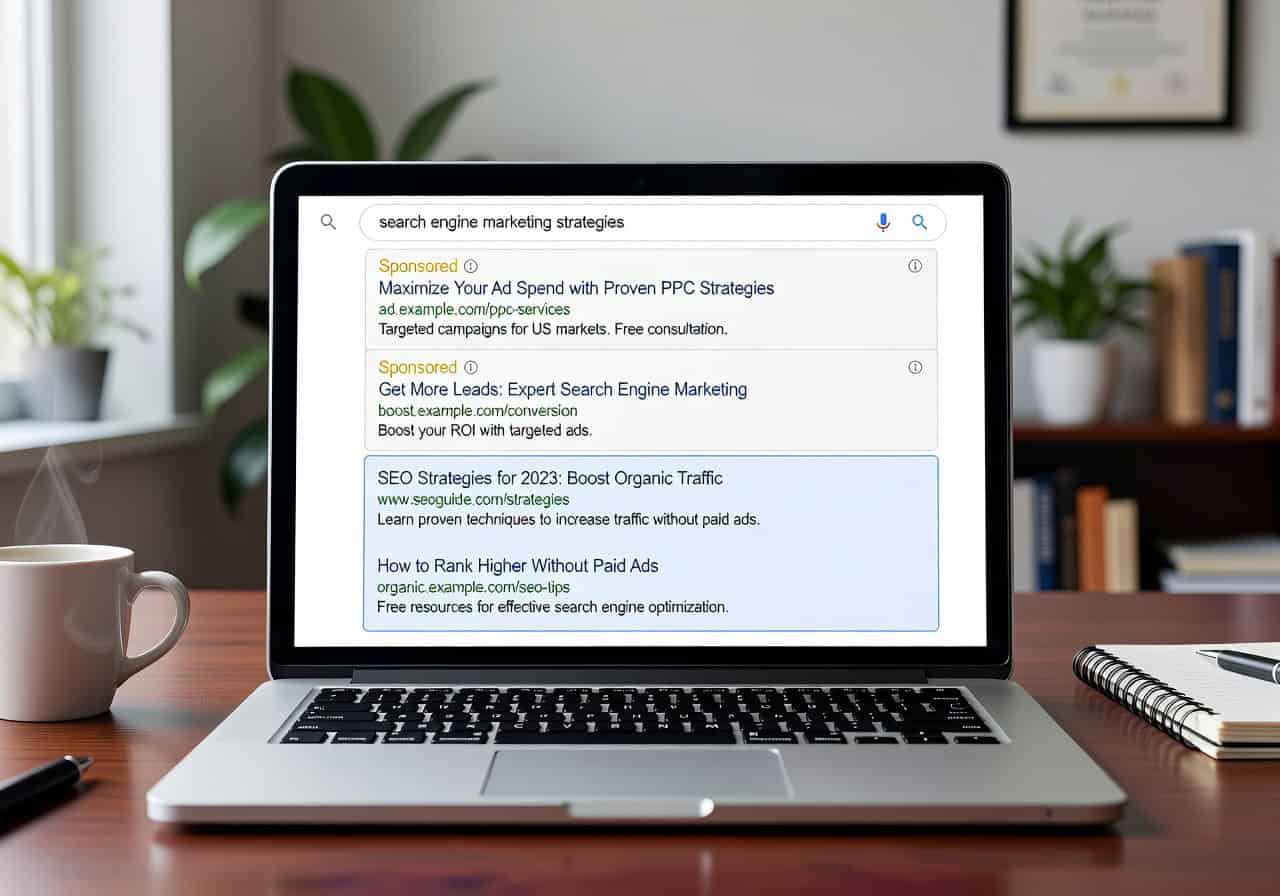
In fact, Why Combining Google Ads and Local SEO is a Good Strategy is that it allows you to dominate the top of the search results page, appearing in both the paid section and the local map pack.
Frequently Asked Questions about Google Ads
What is the difference between Google Ads, AdSense, and Google Ad Manager?
It’s easy to get confused by the names!
- Google Ads: For advertisers who want to buy ad space to promote their business.
- AdSense: For website owners (publishers) who want to sell ad space on their site to make money.
- Google Ad Manager: An enterprise-level platform for large publishers who need granular control over their ad inventory across multiple networks.
How can I improve my Quality Score to lower my CPC?
Focus on the “Big Three”:
- Ad Relevance: Make sure your ad copy includes the keywords you’re bidding on.
- Expected CTR: Write such compelling ads that people can’t help but click.
- Landing Page Experience: Ensure your site is fast, mobile-friendly, and directly related to the ad.
Should a small business manage their own ads or hire an agency?
While Google makes it easy to set up “Smart Campaigns,” these often lack the control needed to maximize ROI. A small business can manage their own ads, but they often end up spending more on wasted clicks than they would have spent on a professional management fee. An agency brings 18+ years of experience and specialized AI tools to the table to ensure you aren’t just spending money, but making it.
Conclusion
At Dietz Group, we’ve seen the digital landscape evolve from simple text ads to the AI-powered ecosystem we see today. With over 18 years of expertise, we specialize in helping businesses in Monroe, NC, and beyond dominate local search results.
Our approach to Google Ads Management combines high-level AI technology with proven strategies focused on high-intent searches. We don’t just look for “clicks”—we look for the customers who are ready to pick up the phone or walk through your door.
If you’re ready to stop guessing and start growing, it’s time to Dominate local search with our Google Ads Management Agency. Let us help you turn your ad spend into a powerful engine for business growth.