The SEO vs. PPC Dilemma Every Small Business Owner Faces
PPC or SEO which is better is one of the most common questions small business owners ask when trying to grow online — and the honest answer is: it depends on your goals, budget, and timeline.
Here’s a quick breakdown to help you decide:
| Factor | SEO | PPC |
|---|---|---|
| Speed | Slow (4–12 months) | Fast (same day) |
| Cost model | Ongoing effort, no cost per click | Pay for every click |
| Long-term ROI | High and compounding | Fixed — stops when budget stops |
| Trust factor | High (organic results) | Lower (some users skip ads) |
| Best for | Sustainable growth | Quick wins and testing |
Bottom line:
- Choose SEO if you want long-term, lower-cost traffic that builds over time.
- Choose PPC if you need leads now or want to test a new offer fast.
- Choose both if you want to dominate your market.
Every day, businesses pour money into one channel while ignoring the other — and almost always leave results on the table. Some sprint ahead with paid ads, then watch their traffic vanish the moment the budget runs dry. Others play the long game with SEO, waiting months for traction while their competitors scoop up customers.
Neither approach alone is the full picture.
The real question isn’t which one is better in general — it’s which one is right for your business, right now. That’s exactly what this guide breaks down.
I’m Rob Dietz, founder of the Dietz Group and a Google Ads Search Partner who has been managing both SEO and PPC campaigns since 2008 — so I’ve seen how ppc or seo which is better plays out across dozens of industries and business sizes. Let’s cut through the noise and get you a clear answer.
Defining the Contenders: SEO vs PPC

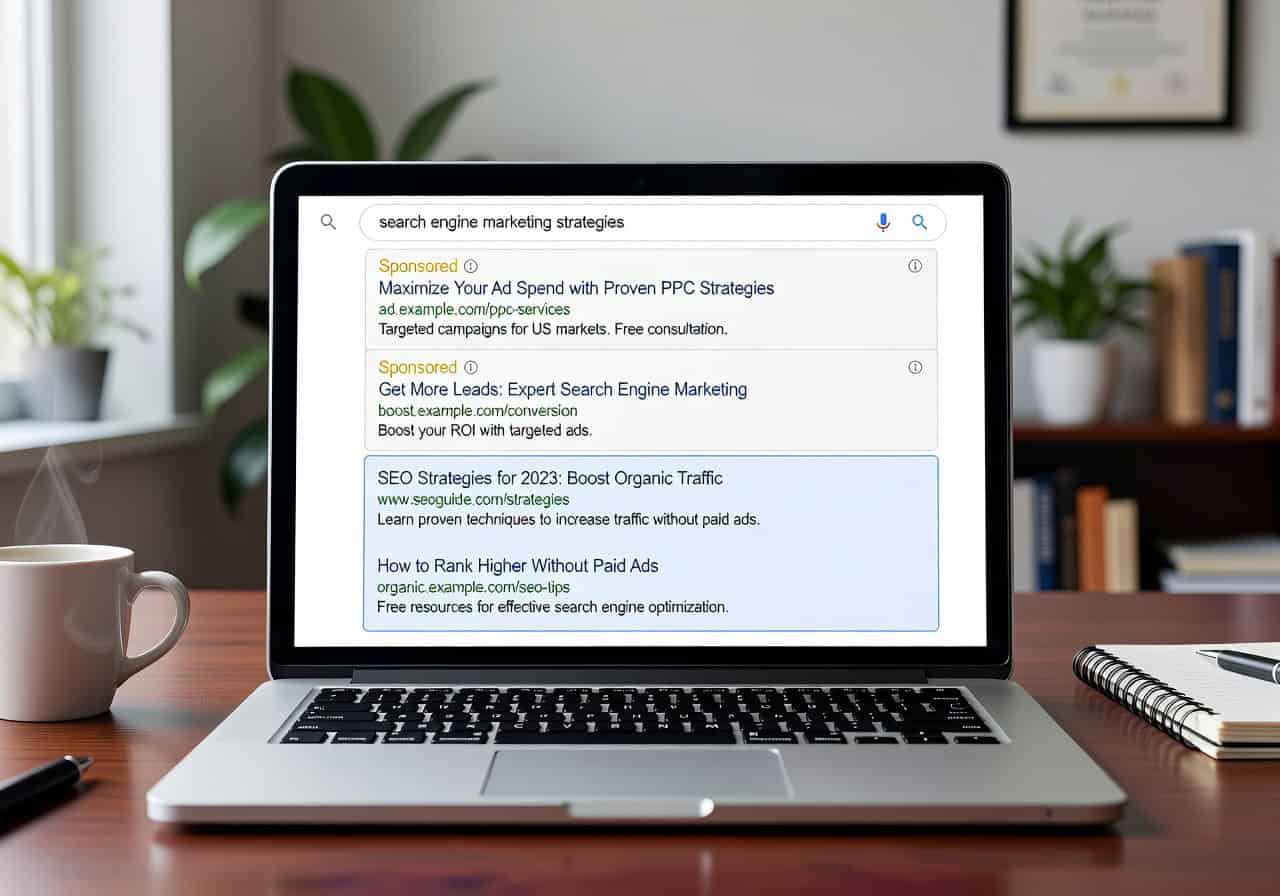
To settle the debate of ppc or seo which is better, we first need to understand the mechanics of the search engine results page (SERP). Think of the SERP as a piece of digital real estate. There are two ways to get your “house” on that land: you can buy your way to the top (PPC), or you can build equity over time (SEO).
What is Search Engine Optimization (SEO)?
Search Engine Optimization is the practice of improving your website to increase its visibility when people search for products or services related to your business. It is “earned” media. When you understand how Google organic search works, you realize it’s all about relevance and authority.
We focus on three main pillars for SEO:
- On-Page SEO: The content on your site, including keywords and meta tags.
- Off-Page SEO: Your reputation across the web, primarily built through backlinks from other reputable sites.
- Technical SEO: How well search engines can crawl and index your site (site speed, mobile-friendliness).
You can track your progress using tools like Search Console to see how Google views your content. For a deeper dive, check out our guide on What is Search Engine Optimization?.
What is Pay-Per-Click (PPC)?
PPC is a model of internet marketing in which advertisers pay a fee each time one of their ads is clicked. Essentially, it’s a way of buying visits to your site, rather than attempting to “earn” those visits organically.
Google Ads is the most popular platform for this. It operates on a bidding system where you compete for ad placement. However, it isn’t just about who has the most money. Google uses a Quality Score—a metric that looks at the relevance of your ad and your landing page—to determine where your ad shows up and how much you pay. If you’re curious about the mechanics, read our breakdown: What is PPC and How Does it Work?.
The Core Differences in ppc or seo which is better
The fundamental difference lies in how you pay and how long the impact lasts. In PPC, you have a cost per click (CPC). The moment you stop paying, your traffic stops. With SEO, the “cost” is the time and resources spent on content and technical fixes, but the traffic doesn’t disappear the moment you take a weekend off.
| Feature | SEO | PPC |
|---|---|---|
| Placement | Below the ads in “organic” listings | Top and bottom of the page, labeled “Sponsored” |
| Cost Structure | Investment in content/tech; no per-click fee | You pay Google for every single click |
| Control | Search engines decide your rank based on algorithms | You control the budget, the ad copy, and the landing page |
| Stability | Vulnerable to algorithm updates | Vulnerable to rising competition and ad blocking |
One major hurdle for PPC is that more than 763 million devices are blocking ads worldwide. Meanwhile, SEO is facing its own challenges with AI-generated summaries that can sometimes keep users on the search page instead of clicking through to your site.
Weighing the Pros, Cons, and ROI
When we look at ppc or seo which is better, we have to weigh the immediate gratification of ads against the long-term authority of organic search.
The Trust Factor
There is a massive psychological difference between a paid ad and an organic result. Research shows that 94% of users ignore paid search results in favor of organic ones. Why? Because users trust Google’s algorithm more than they trust a company’s checkbook. Organic rankings serve as a “vote of confidence” for your brand authority.
However, PPC offers targeting precision that SEO can’t match. You can show an ad only to people in a specific zip code, at a specific time of day, who are using a specific type of device. This makes PPC an incredible tool for local businesses in Monroe, NC, looking to capture immediate “near me” searches.
For a side-by-side breakdown of the advantages, see our SEO vs PPC Pros and Cons list.
Speed to Results: Why PPC Wins the Sprint
If you launched a business this morning, PPC is your best friend. You can set up a campaign and have traffic hitting your site by lunchtime. This makes it perfect for:
- Launch time: Getting initial eyes on a new brand.
- Seasonal promotions: Promoting a Black Friday deal that only lasts 48 hours.
- Testing: Seeing which headlines get people to click before you commit to a 6-month SEO strategy.
In contrast, How Long Does SEO Take? is a question with a longer answer. Most businesses need 4 to 12 months to see significant organic movement.
Long-Term Value: Why SEO Wins the Marathon
While PPC is “rented” traffic, SEO is an “owned” asset. Over time, SEO provides a compounding ROI.
Think of it like this:
- In PPC, if you want 1,000 visitors every month, you pay for 1,000 clicks every month. The cost stays linear.
- In SEO, the work you do in Month 1 continues to pay off in Month 24.
Statistics show that SEO marketing has a minimum ROI of 500% or a 5:1 ratio with a break-even point usually around 6 months. By year three, industries like real estate see an average SEO ROI of 1,389%. This is why we often ask clients: Is Paying for SEO Worth It?. When you look at the long-term cost per lead, the answer is almost always a resounding yes.
Analyzing Conversion Rates and Industry Benchmarks
A common myth in the ppc or seo which is better debate is that organic traffic always converts better because it’s “trusted.” While organic traffic often has higher conversion rates in B2B and professional services, PPC has a secret weapon: transactional intent.
Someone searching for “how to fix a leaky faucet” (SEO intent) is looking for information. Someone clicking an ad for “emergency plumber Monroe NC” (PPC intent) is looking to hire someone right now. In fact, paid visitors are 2 times more likely to purchase than organic visitors because ads are strategically placed in front of users ready to pull the trigger.
However, we must remember that Why Clicks and Impressions Aren’t the Most Important Metrics in Your PPC Analytics is a vital concept. A high click-through rate is useless if those visitors don’t turn into high Customer Lifetime Value (LTV) clients.
Industry Benchmarks for ppc or seo which is better
The “winner” often changes depending on what you sell:
- Ecommerce: In B2C ecommerce, SEO often converts at 3.3% while PPC lags at 1.2%. SEO is 2.8x more effective here because shoppers like to research and compare before buying.
- Legal Services: SEO converts at 4.3% vs PPC at 1.8%. Trust is paramount in legal matters, and organic rankings build that trust.
- Real Estate: This industry sees massive long-term gains from SEO, but often uses PPC for immediate lead flow on specific listings.
- Content Marketing: Keyword research and high-quality content with transactional intent can bring a 748% SEO ROI, while basic technical SEO alone brings about 117%.
The Power of Synergy: Combining Strategies
At Dietz Group, we rarely suggest picking just one. The most successful businesses use a “blended” strategy to achieve SERP dominance. When you appear in the top ad spot and the #1 organic spot, your brand’s perceived authority skyrockets, and your total click-through rate can increase by over 30%.
How PPC Supports SEO
- Keyword Testing: Don’t guess which keywords will convert. Run a PPC campaign for 30 days. The keywords that actually generate sales are the ones you should build your long-term SEO strategy around.
- Immediate Visibility for New Content: Just published a massive guide? Use PPC to drive initial traffic to it while you wait for Google to index and rank it.
- Remarketing: This is where the magic happens. A user finds you through an organic search (SEO), leaves without buying, and then sees your ad (PPC) later that day, reminding them to come back.
We’ve seen this work wonders for local businesses. Why Combining Google Ads and Local SEO is a Good Strategy is because it covers the entire buyer journey. You can also see How Google Ads Can Supercharge Local Service Businesses by filling the gaps when organic rankings are still maturing.
Navigating the Future of Search in 2026
The landscape of ppc or seo which is better is shifting rapidly due to AI. In 2026, we’ve seen that organic search CTR declined significantly due to AI Overviews (formerly known as SGE). These are the AI-generated summaries that appear at the top of the page, pushing both ads and organic links further down.
Furthermore, 37% of users now start with AI tools like ChatGPT or Perplexity instead of a traditional search engine. This has given rise to Answer Engine Optimization (AEO)—optimizing your content so that AI models cite your business as the answer to a user’s prompt.
On the paid side, privacy is the new priority. With the decline of third-party cookies, tools like Google’s Consent Mode are becoming essential for businesses to track conversions while respecting user privacy.
Frequently Asked Questions about ppc or seo which is better
Does running PPC ads help my organic SEO rankings?
The short answer is no—at least not directly. Google maintains a “church and state” separation between its ad platform and its organic algorithm. Buying ads won’t magically make your website rank higher in the blue links. However, it helps indirectly by increasing brand awareness. If people see your ads often, they are more likely to click your organic link when they see it later because they recognize your name.
Which is better for a small business with a limited budget?
If your budget is very tight, SEO is often the smarter move because it builds an asset. You can even do some SEO on your own to get started. However, if you need a sale this week to keep the lights on, a small, highly-targeted PPC campaign is the only way to guarantee immediate traffic. Most small businesses find success starting with a 70/30 split—70% of effort into SEO for the future, 30% into PPC for today’s leads.
How do I measure the ROI of SEO compared to PPC?
PPC is easy to measure: (Revenue – Ad Spend) / Ad Spend. SEO is trickier because of the time lag. We recommend looking at the “Cost Per Acquisition” (CPA). Over 12 months, you’ll usually find that while the PPC CPA stays flat, the SEO CPA drops significantly as your organic traffic grows.
Conclusion
So, ppc or seo which is better? The dilemma isn’t about choosing a winner; it’s about choosing the right tool for the job. PPC is your microwave—fast, efficient, and great for immediate needs. SEO is your slow-cooker—it takes time, but the results are much richer and more sustainable.
At Dietz Group, we specialize in helping businesses in Monroe, NC, and beyond navigate this choice. Whether you need to dominate local search results with Local SEO or capture high-intent buyers through SEM, our 18+ years of expertise and AI-driven strategies ensure you aren’t just getting clicks—you’re getting customers.
The digital landscape is changing, from AI Overviews to zero-click searches. Don’t leave your growth to chance.