Why an AI Search Optimization Guide Matters in 2026
An ai search optimization guide is more relevant right now than at any point in the history of digital marketing. Here’s what you need to know at a glance:
What AI Search Optimization Covers:
- Get found by AI engines – Ensure ChatGPT, Perplexity, and Google AI Overviews can crawl and cite your content
- Structure content for extraction – Write in clear, modular sections AI can pull directly into answers
- Build E-E-A-T signals – Demonstrate expertise, authority, and trust so AI engines select your brand
- Use schema markup – Add JSON-LD structured data so AI can read your content accurately
- Track AI visibility – Monitor how often and how accurately your brand appears in AI-generated responses
Search has changed dramatically. AI Overviews now appear in nearly half of all Google searches. AI referrals to top websites spiked 357% year-over-year in June 2025, reaching over 1 billion visits. And according to research, 85.7% of brands are currently invisible to AI search engines entirely.
The old playbook – target keywords, earn backlinks, rank in the top 10 blue links – is no longer enough on its own. AI systems don’t just rank pages. They read them, extract the clearest answers, and synthesize responses. If your content isn’t structured to be extracted, you simply won’t be cited.
This guide walks you through exactly what to do about that.
I’m Rob Dietz, a digital marketing consultant with over 18 years of experience helping business owners grow their online visibility – and this ai search optimization guide reflects the same no-nonsense, results-focused approach I’ve applied to SEO and digital marketing strategy since 2008. Let’s break down what actually works.
Ai search optimization guide vocabulary:
Understanding AI Search Optimization (GEO/AEO)
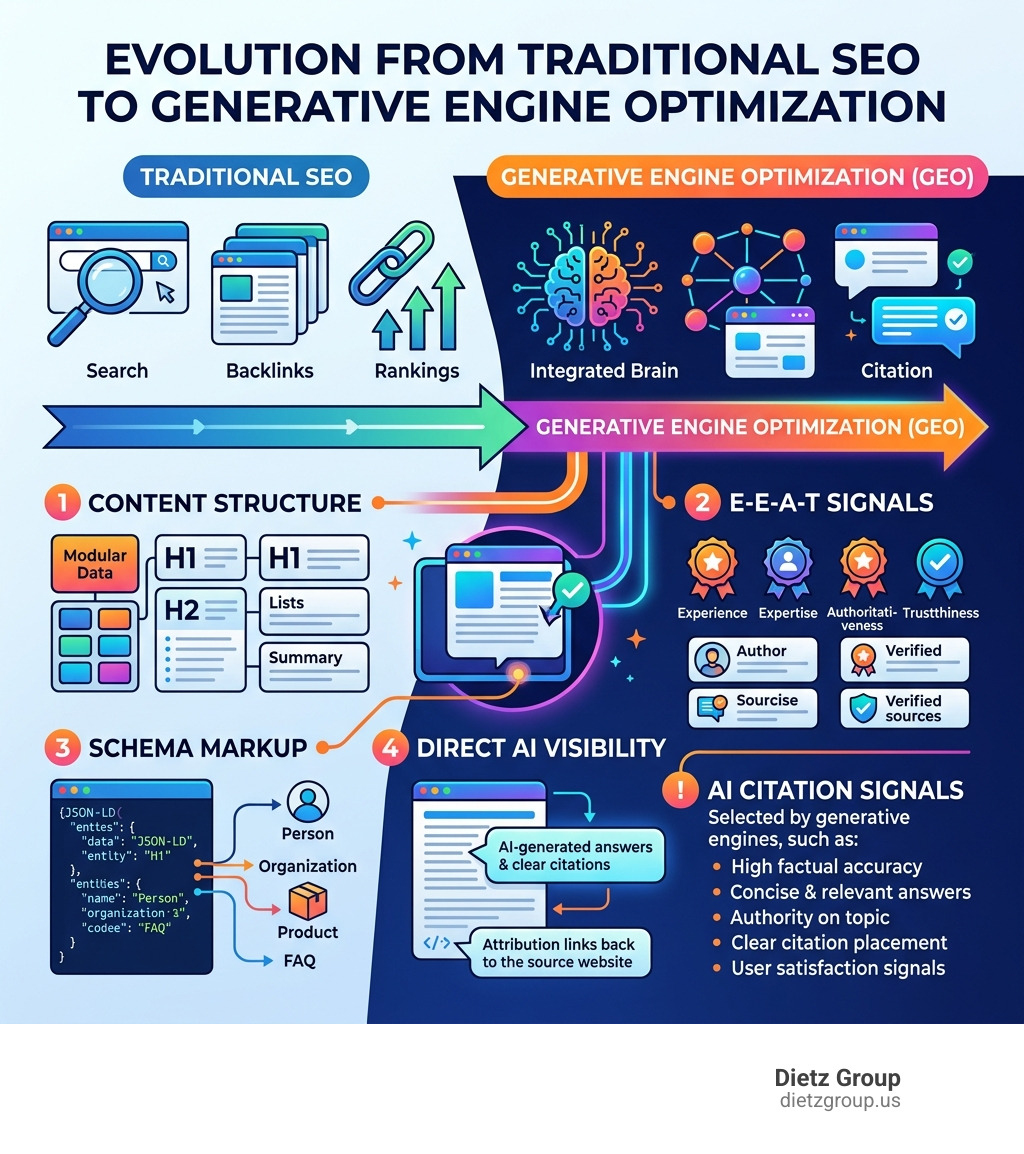
If you’ve been in the marketing world for more than five minutes, you’re likely used to SEO. But as we navigate May 2026, two new acronyms have taken center stage: GEO (Generative Engine Optimization) and AEO (Answer Engine Optimization). While they sound like alphabet soup, they represent a fundamental shift in how people find information.
Traditional search engines like Google used to act like a librarian pointing you to a shelf. AI search engines—like ChatGPT, Perplexity, and Google’s AI Mode—act like a researcher who reads the books for you and summarizes the best parts.
What is Generative Engine Optimization (GEO)?
GEO is the process of making your website’s content easy for Large Language Models (LLMs) to parse, extract, and cite. Instead of just trying to rank #1 for a keyword, you are trying to become the “source of truth” that the AI uses to build its answer. AI SEO & Generative Engine Optimization in North Carolina focuses on this exact transition, helping brands move from being a “link” to being a “citation.”
The Mechanics of AI Parsing
AI models don’t “read” a page the way humans do. They use crawlers to break your content into modular pieces. If your content is buried in a 5,000-word wall of text without clear structure, the AI might skip it. To win, your content must be:
- Modular: Broken into digestible segments.
- Verifiable: Backed by data and facts. Research shows that content with verifiable data earns 30–40% more visibility in LLM-generated answers.
- Fresh: AI engines suffer from “semantic drift” where older content loses its relevance. Updating your key pages every 90 days is now a baseline requirement.
The Core Pillars of an AI Search Optimization Guide
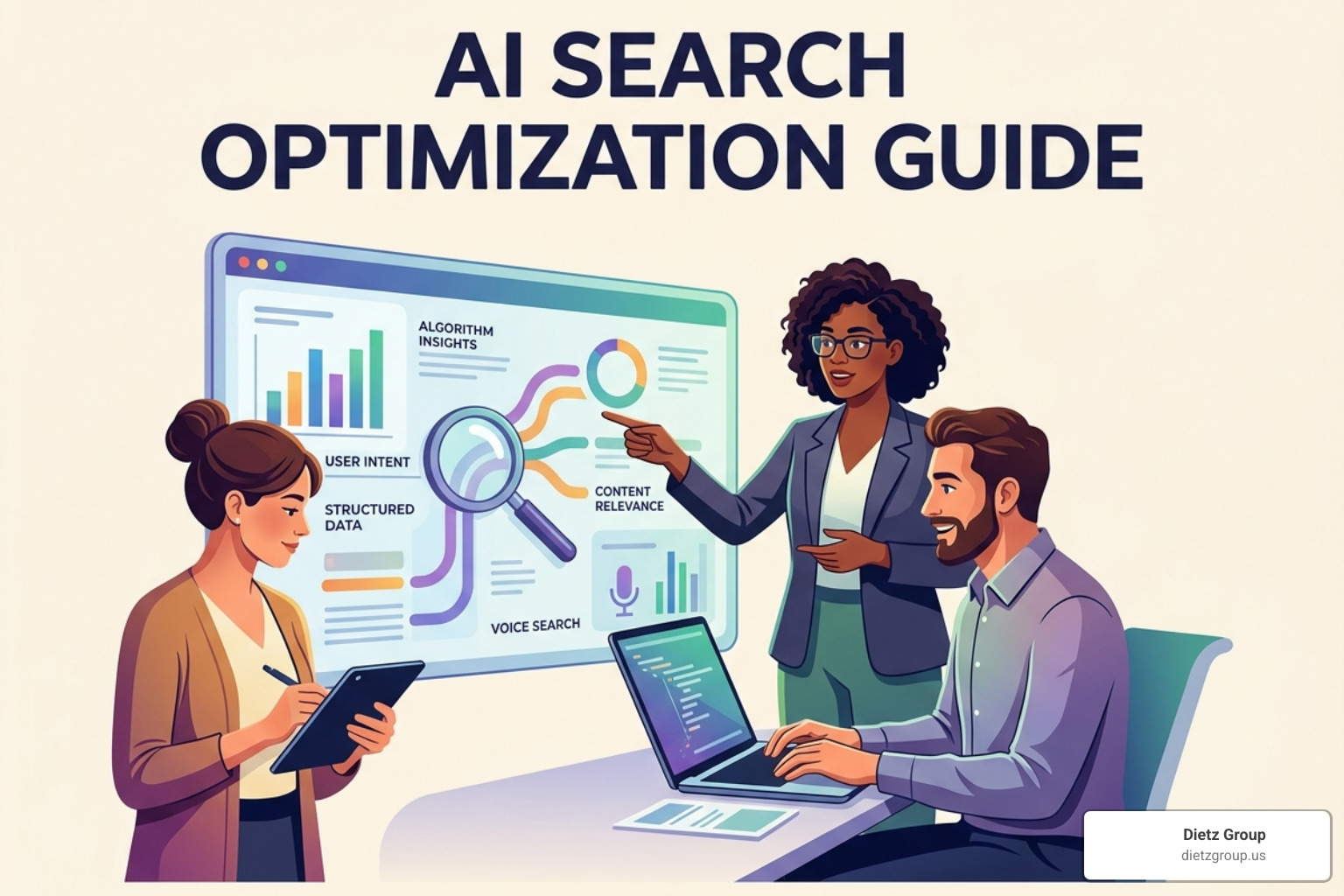
To dominate AI search, we need to focus on what the machines value. While keywords still matter, the “context” and “authority” of those keywords have become the primary drivers of visibility. This is where The Rise of Generative AI SEO Services has changed the game for modern businesses.
E-E-A-T and Topical Authority
Google’s E-E-A-T (Experience, Expertise, Authoritativeness, and Trustworthiness) isn’t just for traditional SEO anymore; it’s the fuel for AI citations. AI models look for “entities”—real people, established brands, and recognized experts.
- Brand Mentions: If other authoritative sites talk about you, AI models are more likely to recommend you.
- Entity Density: Using specific names, places, and technical terms (entities) helps AI understand exactly what you are an expert in.
Freshness and Accuracy
In 2026, stale content is invisible content. AI crawlers prioritize information that is current. If your “Best of” list was last updated in 2024, an AI engine like Perplexity—which relies heavily on real-time data from sources like Reddit and news outlets—will likely pass you over for a newer source.
| Traditional SEO Factor | AI Search Citation Signal |
|---|---|
| Keyword Density | Semantic Context & Entity Density |
| Backlink Quantity | Brand Mentions & Digital PR |
| Meta Keywords (Obsolete) | Schema Markup (JSON-LD) |
| PageRank | Extractability & Modular Structure |
| Click-Through Rate | Fact Density & Verifiable Data |
Structuring Content for AI Parsing
AI assistants break content into smaller pieces via parsing. If your page is a giant PDF or a series of images, you’re essentially invisible to most LLMs. 69% of AI crawlers cannot execute JavaScript effectively, so server-side rendering is your best friend.
We recommend using a clear H2/H3 hierarchy to create “content slices.” Think of each subheading as a question and the paragraph below it as a self-contained answer.
- The 75-300 Word Rule: Keep your content modules within this range. It’s the “sweet spot” for AI extraction.
- Scannable Elements: Use bulleted lists and tables. Comparison tables provide a 2.5x citation lift because AI models love structured data comparisons.
For more on this, check out The Essential Guide to Optimizing for AI Overviews.
Technical Readiness and AI Crawler Access
You can’t get cited if you’re blocking the bots. Many site owners accidentally block AI crawlers in their
robots.txt
file. You need to ensure that user agents like GPTBot, ClaudeBot, OAI-SearchBot, and PerplexityBot have permission to access your site.
A new standard,
llms.txt
, is also emerging. This is a simple text file placed in your root directory that provides a “map” for AI agents, telling them which pages are the most important and providing a brief summary of your site’s purpose. It’s part of the shift where we Stop Optimizing for Robots and Start Optimizing for Genies.
Advanced Strategies for AI Visibility
Once your foundation is set, it’s time to go on the offensive. AI visibility isn’t just about what is on your page; it’s about your brand’s footprint across the entire web.
Digital PR and External Signals
AI models are trained on massive datasets including Wikipedia, Reddit, and YouTube.
- YouTube Authority: There is a 0.737 correlation between a strong YouTube presence and AI visibility. If you explain a concept on video, the AI is more likely to trust your text-based explanation on your blog.
- Reddit Engagement: Platforms like Perplexity cite Reddit in nearly 47% of their top answers. Participating in industry discussions helps build the “knowledge graph” around your brand.
- The DC Connection: Understanding How AI is Changing Search | DC Help – NC Digital Commons highlights how even public sector and community data are now influencing the answers AI gives to everyday users.
Implementing Schema Markup for AI Search Optimization Guide Success
If your content is the “story,” Schema markup is the “cliff notes” for the AI. Using JSON-LD (the preferred format for AI) turns plain text into machine-interpretable data.
- FAQPage Schema: This is a powerhouse. It can increase AI citation rates by up to 89%.
- Organization and Person Schema: These tell the AI exactly who you are and why you’re qualified to speak.
- NAP (Name, Address, Phone): This remains critical. What is NAP and Why It’s Critical for Local SEO in the Age of AI explains that if an AI finds conflicting contact info for your business, it loses “trust” and may stop recommending you for local queries.
Creating Quotable and Scannable Content
In our ai search optimization guide, we emphasize the “CITABLE” framework:
- Clear definitions
- Inline citations
- Tables & lists
- Answer-first architecture
- Bite-sized paragraphs
- Links to authorities
- Evidence (data points)
Using an inverted pyramid style is key. Lead with a 40-60 word summary that answers the main query immediately. This “answer-first” approach can boost ChatGPT citations by 140% because the AI doesn’t have to “hunt” for the point of your article. For a deeper dive, see The Ultimate Guide to ChatGPT Generative SEO Tips.
Frequently Asked Questions about AI Search Optimization
How long does it take to see results from an ai search optimization guide strategy?
In our experience, a good SEO and GEO campaign takes 12-18 months to see full results. While you might see a citation in an AI Overview within a few weeks of a structural update, building the necessary authority and “trust signals” for consistent AI recommendations is a long-term play. AI models update their training data and retrieval layers at different speeds—Perplexity might see your changes in 2 weeks, while Google AI Overviews may take 4-8 weeks to reflect a shift in your site’s structure.
Does traditional SEO still matter for AI search?
Absolutely. Traditional SEO is the foundation that gets you “in the pool” for AI to consider. Factors like site speed (TTFB < 400ms), mobile-friendliness, and a healthy backlink profile are still the primary ways search engines discover your content in the first place. AI search isn't replacing SEO; it's adding a new layer of optimization on top of it. We discuss this synergy in our guide on AI and Local SEO.
How do I track my brand’s visibility in AI answers?
Tracking “rankings” is getting harder because AI answers can change with every prompt. Instead, we look at:
- Visibility Rate: How often your brand appears in a set of 50-100 relevant prompts.
- Citation Frequency: How many times the AI links back to your specific URLs.
- Sentiment Accuracy: Is the AI describing your brand correctly, or is it “hallucinating” facts?
- Referral Traffic: Use tools like Google Analytics to track traffic from
chat.openai.comorperplexity.ai.
Conclusion
The era of “ten blue links” is fading, replaced by a world of synthesized answers and agentic search. To stay relevant, businesses must move beyond simple keyword targeting and embrace a comprehensive ai search optimization guide strategy.
At Dietz Group, we’ve spent over 18 years staying ahead of the curve. We combine deep technical expertise with the latest AI technology to ensure our clients don’t just exist online—they dominate the conversation. Whether it’s through advanced JSON-LD implementation or modular content restructuring, our high-ROI strategies are designed to put your brand front and center when AI engines are looking for answers.
This is a marathon, not a sprint. Success in this new landscape requires a consistent, 12-18 month commitment to quality, structure, and authority.
Ready to secure your spot in the future of search? Partner with a Local Generative Engine Optimization Agency that understands where the “genies” are going. Let’s build your AI visibility together.