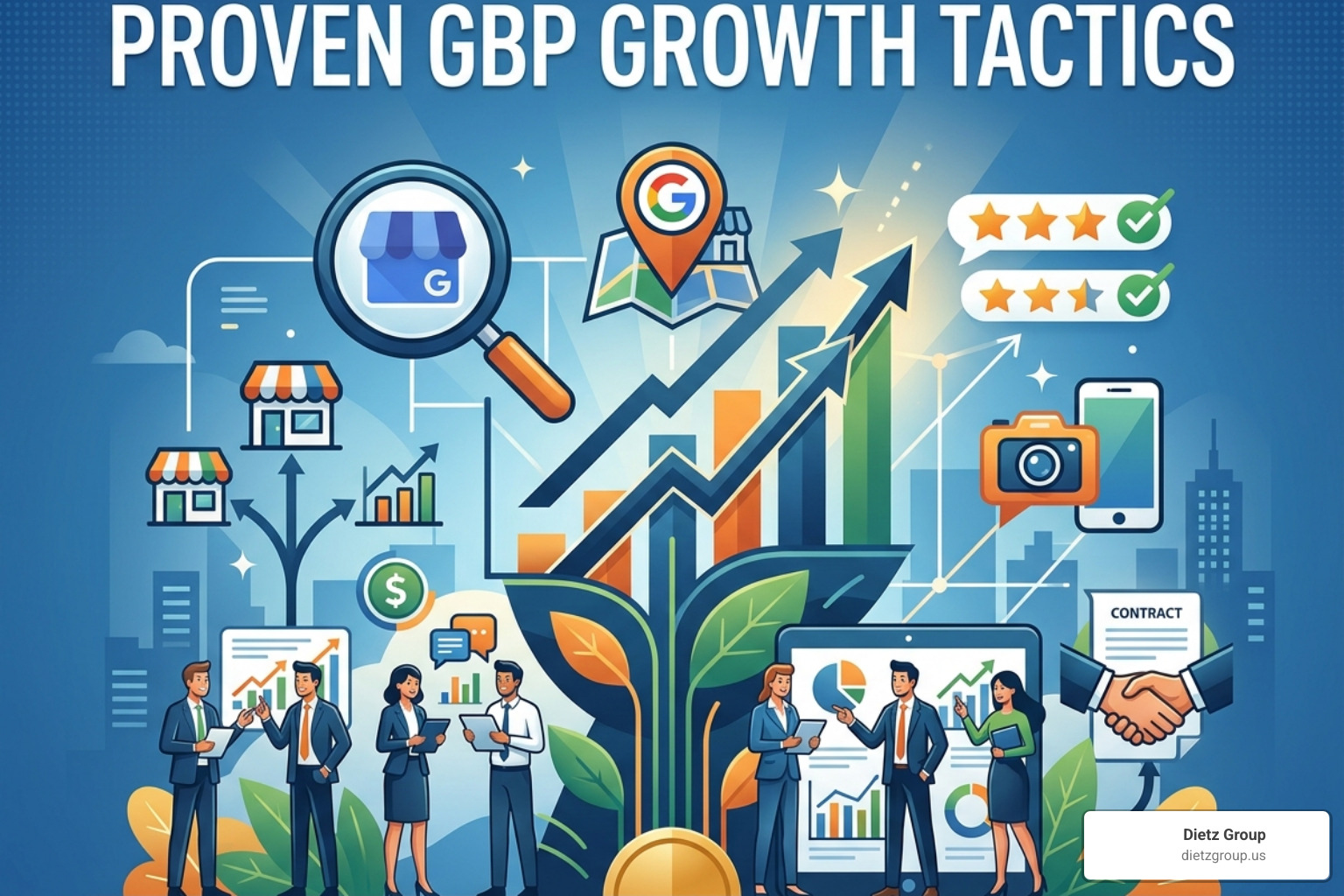
Core Foundations of Proven GBP Growth Tactics
Think of your Google Business Profile as your digital storefront. If the lights are off and the windows are dusty, people will walk right past you. To dominate local search, you need a profile that is not only complete but strategically tuned to what Google’s algorithm wants to see.
A Google Business Profile is more than just a listing; it is a conversion engine. When searchers look for a service “near me,” Google looks for signals that your business is legitimate, relevant, and active. This starts with a foundation of profile completeness. Every section—from your business name to your services and operating hours—must be filled out accurately. According to The Ultimate Google Business Profile Management Guide, a neglected profile signals to both Google and potential customers that you might not be open for business.
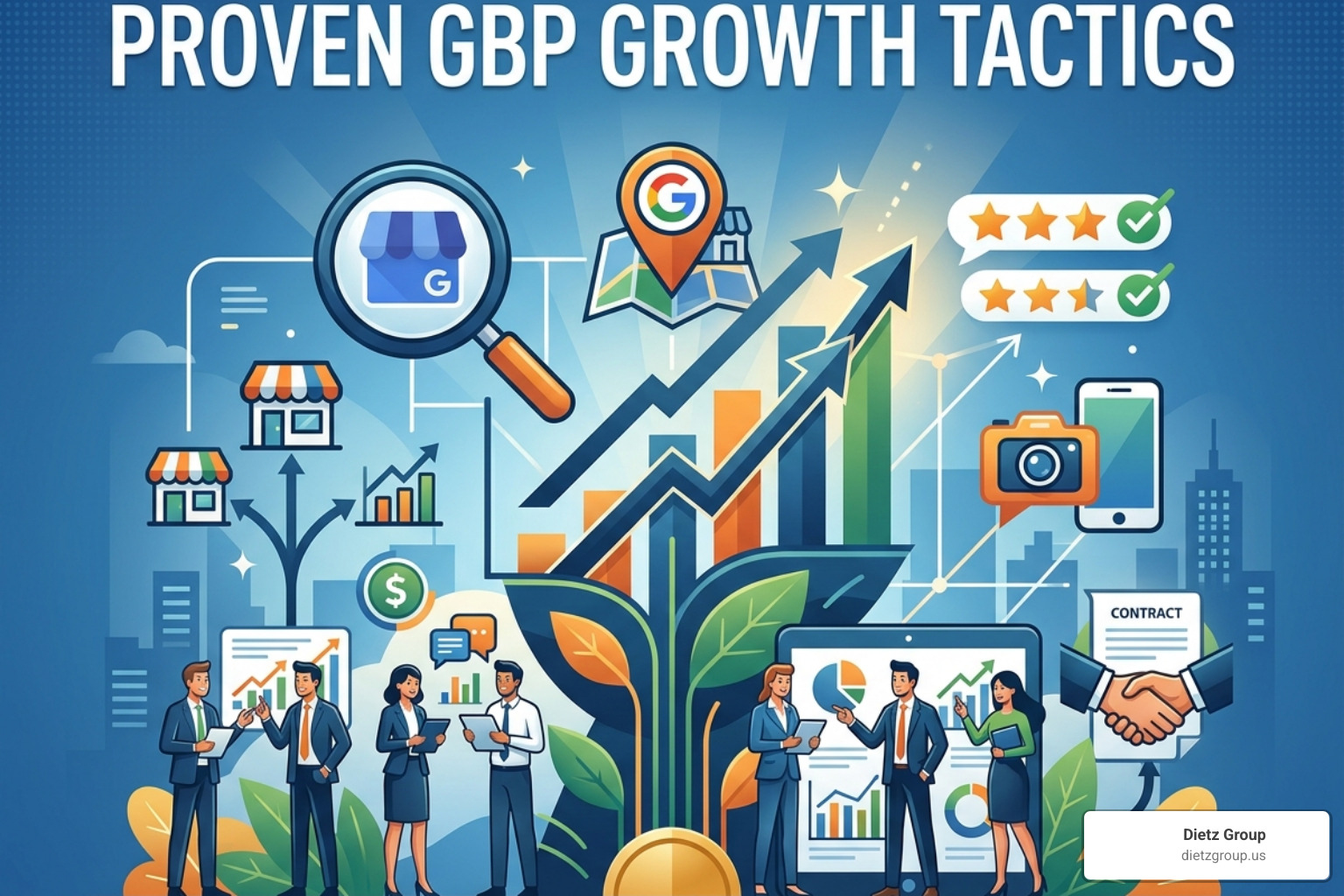
Selecting Categories: The “IS a” vs “HAS a” Framework
One of the most common mistakes we see is improper category selection. Google uses your primary category to understand the core nature of your business. If you get this wrong, you won’t show up for the right searches.
The golden rule is this: Select categories that complete the statement: “This business IS a…” rather than “This business HAS a…”
For example, if you run a large grocery store that contains a pharmacy and a deli, your primary category should be “Grocery store.” You describe the business holistically. You then add “Pharmacy” and “Deli” as secondary categories.
- Primary Category: Defines the core identity and carries the most ranking weight.
- Secondary Categories: Capture broader search intent and help you appear in more diverse local queries.
Missing even one relevant secondary category can significantly limit your local search impressions, even if your primary choice is spot on.
NAP Consistency and Profile Completeness
NAP stands for Name, Address, and Phone number. It sounds simple, but inconsistency here is a major ranking killer. Google’s algorithm acts like a detective; it cross-references your information across the entire web—social media, directories like Yell, and your own website. If your address is listed as “123 Main Street” on Google but “123 Main St.” on your website, it can create a “signal of distrust.”
Follow these 3 tips to optimize your Google Business Profile for maximum accuracy:
- Use a local phone number: Toll-free numbers are fine for national brands, but local numbers signal “proximity” to the searcher.
- Match your website URL: Ensure the link goes to your homepage or a specific local landing page.
- Update your hours: Nothing frustrates a customer—or Google—more than a business marked as “Open” that is actually closed. Regular updates to holiday hours signal that your profile is active.
Advanced Engagement and Content Strategies
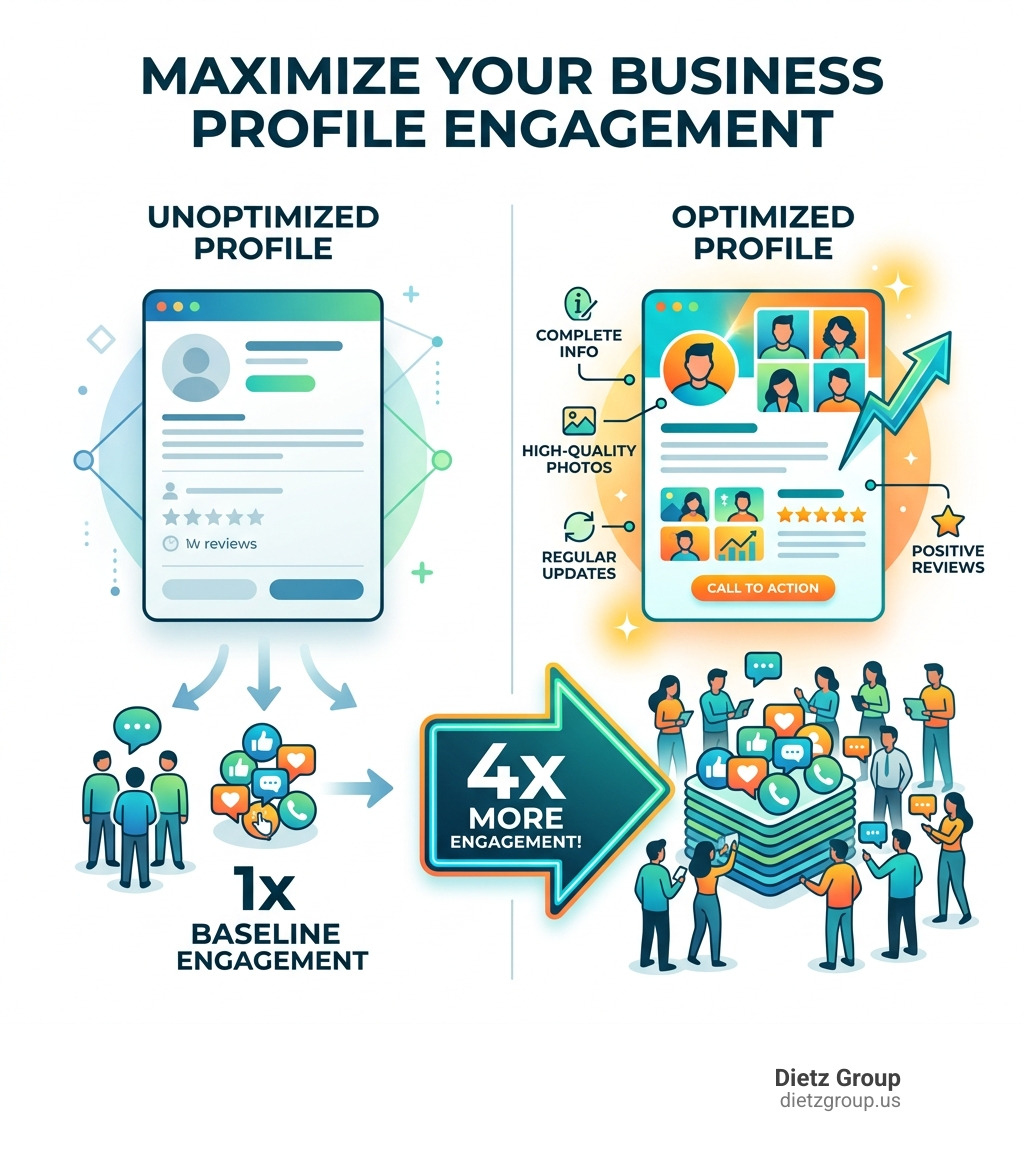
Once your foundation is solid, it’s time to move into active engagement. Google loves “freshness.” Profiles that are updated regularly with new content and photos tend to stay at the top of the Map Pack.

Leveraging Google Posts for Proven GBP Growth Tactics
Google Posts are essentially mini-ads that appear directly on your profile. They are a powerful tool for proven GBP growth tactics because they provide immediate engagement signals to Google.
We recommend a posting cadence of 3 to 5 times per week. You don’t need to overthink these; they should be helpful and intent-driven:
- Update Posts: Share a quick tip or a “behind the scenes” look at your team.
- Offer Posts: Promote a limited-time discount to drive clicks.
- Event Posts: Highlight upcoming webinars or community gatherings.
Using Google Business Profile Management strategies, you can align these posts with the keywords your customers are actually searching for. If you want to rank for “emergency HVAC repair,” make sure you’re posting about your 24/7 availability.
Visual Storytelling with Photos and Virtual Tours
Photos are not just “nice to have.” They are a critical part of how to make Google fall in love with your business profile. Profiles with high-quality, real photos receive 35% more clicks than those with stock images or no photos at all.
To take it a step further, consider adding a 360-degree virtual tour. This allows potential customers to “walk through” your doors before they ever leave their house. It builds immense trust and increases the time users spend interacting with your profile—a key ranking signal. When uploading images, ensure they are high-resolution and, where possible, show your staff in action. This humanizes your brand and makes you the obvious choice in a sea of faceless competitors.
Reputation Management and Ranking Signals
Google’s local ranking algorithm is built on three pillars: Proximity (how close you are), Relevance (how well you match the search), and Prominence (how well-known you are). While you can’t change your physical location, you can absolutely influence relevance and prominence through reputation management.

Review Generation for Proven GBP Growth Tactics
Reviews are the lifeblood of local SEO. They provide social proof to customers and keyword-rich data to Google. A Fort Worth spa recently saw a 22% increase in bookings simply by focusing on a review-generation campaign.
To master this part of your proven GBP growth tactics, you must:
- Ask for reviews at the peak of satisfaction: Don’t wait three weeks; ask as soon as the service is completed.
- Respond to every single review: This includes the bad ones. Professional, calm responses to negative feedback can actually build more trust than a perfect 5-star record.
- Use keywords in your replies: Instead of saying “Thanks for the review,” try “Thanks for choosing us for your roof repair in Monroe!” This reinforces your relevance for those specific terms.
You can even use Google Business Profile Chat to engage with customers in real-time, further boosting your engagement metrics.
Proximity, Relevance, and Prominence Factors
Prominence is often the “secret sauce” of the 3-Pack. It’s a measure of how much the internet talks about you. We build prominence through “signal stacking”—combining local citations, brand mentions, and authority links.
- Local Citations: These are mentions of your business on other websites like Yelp, Yellow Pages, or local chamber of commerce sites.
- Schema Markup: This is “code for humans” that helps Google understand the specific details of your business, like your reviews and services, more clearly. Missing schema can leave up to 40% of your potential visibility on the table.
- Brand Mentions: Even if a local news site doesn’t link to you, a mention of your business name and city helps Google associate you with that area.
According to experts like Natalie Frith Smith, building a strong brand presence across multiple platforms is essential for long-term sales growth and market authority.
Protecting Your Profile and Measuring Success
The local search landscape can be a bit like the “Wild West.” Competitors may try to sabotage your listing, or Google’s automated systems might trigger a sudden suspension. Protecting your profile is just as important as growing it.
Defending Against Competitor Sabotage and Suspensions
Google has a “Suggest an edit” feature that allows anyone—including your rivals—to suggest changes to your profile. Malicious actors have been known to change phone numbers to their own or mark a thriving business as “Permanently Closed.”
To defend your profile:
- Monitor your listing 24/7: Set up alerts so you know the second a change is suggested.
- Use secure verification: If you are setting up a new location, follow Google Business Profile video verification tips to ensure a smooth process.
- Be prepared for hurdles: While challenges with Google Business Profile video verification are common, having a professional team to handle the appeal process can reduce recovery time from weeks to just days.
Tracking Performance with GA4 and Search Console
You can’t improve what you don’t measure. While the GBP dashboard provides basic “Insights,” you should use Google Analytics 4 (GA4) and Search Console for a deeper look.
Track these key metrics to see if your proven GBP growth tactics are working:
- Direction Requests: A high-intent signal that someone is physically coming to your store.
- Calls: Use tracking numbers to see exactly how many leads come from your profile versus your website.
- Website Clicks: Monitor which posts or photos are driving the most traffic to your site.
- Geo-grid Reports: These heatmaps show you exactly where you rank in different parts of your city, helping you identify “dead zones” where you need more local signals.
Interestingly, just as traders use data-driven GBPUSD trading strategies to find an edge in the markets, local business owners must use data to find their edge in the Map Pack.
Frequently Asked Questions about GBP Growth
How quickly can I expect results from GBP optimization?
In our experience, a truly effective SEO and GBP campaign takes 12–18 months to see full, sustainable results. While you might see a “quick win” boost in visibility within 30 days of optimizing your categories and photos, dominating a competitive market requires consistent signal building over time. Google needs to see a long-term pattern of activity and positive reviews before it fully trusts your business enough to keep you at the #1 spot.
Should I handle GBP optimization in-house or hire an agency?
While a business owner can certainly handle basic updates, professional management often pays for itself through higher ROI. An agency has access to AI-driven tools, geo-grid reporting, and specialized knowledge on how to handle suspensions or competitor sabotage. If you’re interested in learning the ropes yourself, attending a Google Business Profile Webinar is a great place to start. However, if your goal is aggressive growth, partnering with experts allows you to focus on running your business while we focus on filling your calendar.
What are the most common GBP mistakes to avoid?
- Keyword Stuffing: Adding “Best Plumber Monroe NC” to your business name when it’s not your legal name can lead to an instant suspension.
- Stock Photos: Customers can spot a stock photo from a mile away. They want to see your team and your office.
- Ignoring Negative Reviews: Leaving a bad review unanswered makes you look like you don’t care about customer service.
- Inconsistent NAP: Having different addresses or phone numbers across the web confuses Google and hurts your rankings.
Conclusion
Dominating local search in 2026 requires more than just “setting and forgetting” your profile. By implementing these proven GBP growth tactics—from the “IS a” vs “HAS a” category framework to aggressive review generation and profile protection—you can turn your Google listing into your most valuable marketing asset.
At Dietz Group, we specialize in helping businesses navigate these complexities. With 18+ years of expertise and a focus on high-intent, AI-driven strategies, we know exactly what it takes to get you into the 3-Pack and keep you there. Ready to stop being invisible and start dominating? Explore our Google Business Profile Management Services today and let’s get to work on your growth.