Why Generative Engine Optimization Statistics Matter Right Now
Here are the most important generative engine optimization statistics you need to know in 2026:
| Metric | Statistic |
|---|---|
| Zero-click Google searches | ~60% of searches end without a website visit |
| ChatGPT weekly active users | 900 million |
| AI-referred traffic growth | +600% since January 2025 |
| AI visitor conversion rate | 4.4x higher than traditional organic |
| Gen Z using AI alongside search | 31% |
| Listicle citation rate vs. blog posts | 25% vs. 11% |
| Content cited by AI (under 13 weeks old) | 50% |
| GEO-optimized content discovery speed | Up to 10x faster |
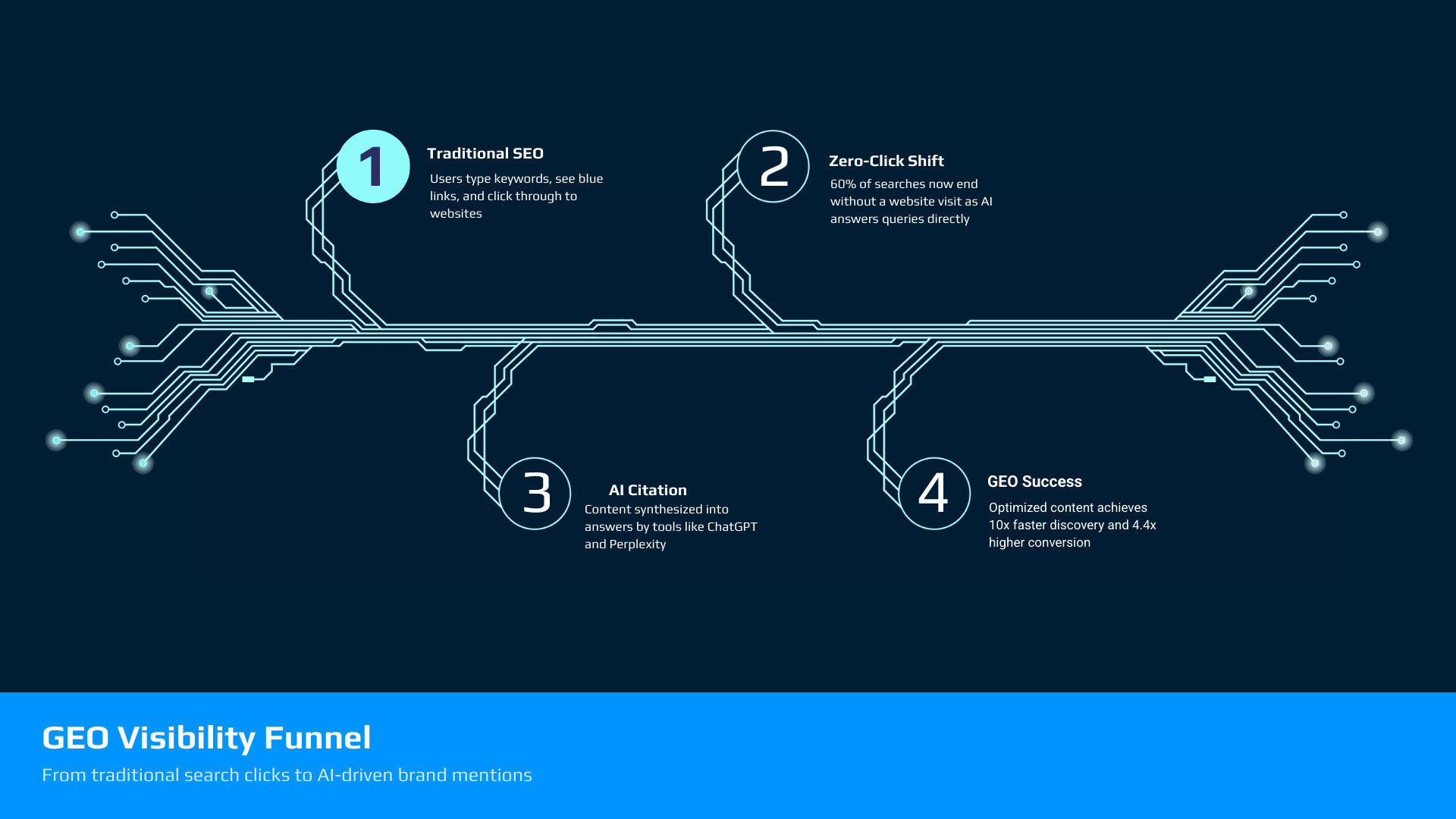
Think about how you searched for something online five years ago. You typed a few words into Google, scanned a list of blue links, and clicked through to a website. That process is quietly becoming a thing of the past.
Today, more than half of all Google searches end without a single click. People are getting their answers directly from AI — tools like ChatGPT, Google AI Overviews, and Perplexity. These platforms don’t just point users to websites. They synthesize an answer and move on.
For small business owners, this shift is huge. If your content isn’t being cited by AI engines, you’re becoming invisible to a growing share of your potential customers — even if you still rank well in traditional search.
That’s exactly why Generative Engine Optimization (GEO) has gone from a buzzword to a business necessity in 2026.
I’m Rob Dietz, founder of the Dietz Group, and I’ve spent 18+ years helping businesses grow their online visibility — from managing Google Ads campaigns since 2008 to staying ahead of every major shift in search, including the rise of AI-powered discovery. Tracking generative engine optimization statistics and translating them into real-world strategy for small businesses is exactly what we do. Let’s break down what the data is telling us.
Generative engine optimization statistics further reading:
The Shift from Search Engines to Answer Engines
We are witnessing the end of what experts call the “Click Era.” For decades, search engines were essentially digital phone books; they gave you a list of names and numbers, and you did the calling. Now, we’ve moved into the age of “Answer Engines.”

The growth is staggering. ChatGPT has crossed 900 million weekly active users as of May 2026, and 77% of those users treat the tool as their primary search engine. Meanwhile, Google AI Overviews have exceeded 1.5 billion monthly users. These platforms don’t just find information; they synthesize it.
This shift has created a new type of digital currency: the citation. In traditional SEO, we fought for “Rank 1.” In GEO, we fight to be the source the AI mentions when it explains a topic to a user. This is a fundamental change in The Rise of Generative AI SEO Services.
According to Generative Engine Optimization: 2026 Verified Stats & Trends, reliance on traditional search engines is projected to drop by 25% by the end of this year. For marketers, this means visibility can now occur without a single website visit. Your brand’s authority is now measured by how often an AI “referee” picks your content to support its answer.
Critical Generative Engine Optimization Statistics for 2026
The data tells a clear story: if you aren’t optimizing for generative engines, you’re missing out on the highest-converting traffic available today.
The Rise of the Zero-Click Search
Approximately 60% of global Google searches now result in no clicks. Users are finding exactly what they need in the AI-written summary at the top of the page. While this sounds scary for traffic, the reality is that the traffic that does click through is much more valuable. AI-referred shoppers convert 31% higher and have 27% lower bounce rates compared to other organic sources.
Adoption and Growth
User behavior is shifting faster than many brands can keep up.
- Gen Z Adoption: 31% of Gen Z users now turn to answer engines or chatbots alongside traditional search. In fact, 41% of Gen Z use social media as their first point of search, bypassing Google entirely.
- Traffic Surge: AI-referred traffic rates have increased by 600% since January 2025.
- Discovery Speed: Early adopters report that GEO-ready content is discovered up to 10x faster by generative engines compared to relying on organic SEO alone.
Performance Benchmarks
According to 50 Generative Engine Optimization Statistics [2025 Data], Google AI Overviews account for 51.4% of all AI citations, making them the most influential player in the space. Interestingly, 89% of ChatGPT citations come from pages that rank below position 20 in traditional search, proving that Optimizing Content for AI Search Answers can give smaller brands a massive competitive edge.
Content Formats That Win the AI Citation Game
Not all content is created equal in the eyes of an LLM (Large Language Model). To win the citation game, we have to look at what these engines prefer to “extract.”
The Dominance of Video and Listicles
Video has become the single most cited content format across every vertical. YouTube alone accounts for nearly a quarter of all AI citations. If you aren’t integrating video transcripts and structured video data, you’re leaving citations on the table.
When it comes to written text, structure is king:
- Listicles: Achieve a 25% citation rate.
- Comparison Articles: Lead all content types with a 32.5% citation rate.
- Narrative Blog Posts: Only see an 11% citation rate.
The 13-Week Freshness Rule
One of the most surprising generative engine optimization statistics is the “shelf life” of content. 50% of the content cited in AI answers is less than 13 weeks old. This means a “set it and forget it” strategy is dead. To stay relevant, cornerstone content must be refreshed at least every three months. We discuss these specific formatting requirements in The Ultimate Guide to ChatGPT Generative SEO Tips.
Search Everywhere Optimization
It’s no longer just about your website. AI engines pull from Reddit, industry forums, and social media to build their answers. Reddit alone saw a 450% increase in AI citations in 2025. This holistic approach is detailed in A Comprehensive Guide to Search Everywhere Optimization.
Strategic Implementation and ROI
Transitioning to a GEO-first strategy isn’t just about keeping up with trends; it’s about the bottom line. The Generative Engine Optimization Statistics 2026: $7.3B Market, 58% AI Usage, 34% CAGR Growth report highlights that the GEO services market is exploding, and for good reason—it works.
Analyzing Generative Engine Optimization Statistics for ROI
The ROI on GEO is significantly higher than traditional organic search for many of our clients.
- Conversion Power: AI search visitors convert at 4.4 times the rate of traditional organic search visitors.
- Cost Efficiency: The cost per GEO lead is estimated to be 62% less than traditional SEO leads because the traffic is higher intent.
- Revenue Impact: Generative AI and AI agents drove an estimated $262 billion in global retail revenue during the 2025 holiday season.
In our experience, balancing SEO vs PPC is still vital, but GEO acts as a “turbocharger” for your organic efforts. You can read more about this mindset shift in The Essential Guide to Optimizing for AI Overviews.
Benchmarking Generative Engine Optimization Statistics Against Competitors
To win, you have to know where you stand. We track “AI Share of Voice” and “Citation Frequency.” Currently, 78% of marketers are NOT tracking their AI visibility. This creates a massive opportunity for the early adopters. The top 10% of GEO adopters are currently capturing 70% of all AI-driven traffic. If you aren’t the one being cited, your competitor likely is.
As we often say at Dietz Group, you should Stop Optimizing for Robots and Start Optimizing for Genies.
Frequently Asked Questions about GEO
How fast can I see results from GEO compared to SEO?
While a good SEO campaign typically takes 12-18 months for full results, GEO impact can be seen much faster. Because platforms like Perplexity and Google AI Overviews use real-time indexing, structural changes to your content can impact citations within 30-60 days. GEO-optimized content is discovered up to 10x faster than traditional content.
Which content types are most likely to be cited by AI?
AI engines love “extractable” data. This includes:
- Technical Statistics: Adding specific data points can lift visibility by 41%.
- Expert Quotes: Directly quoting authorities increases inclusion by 30%.
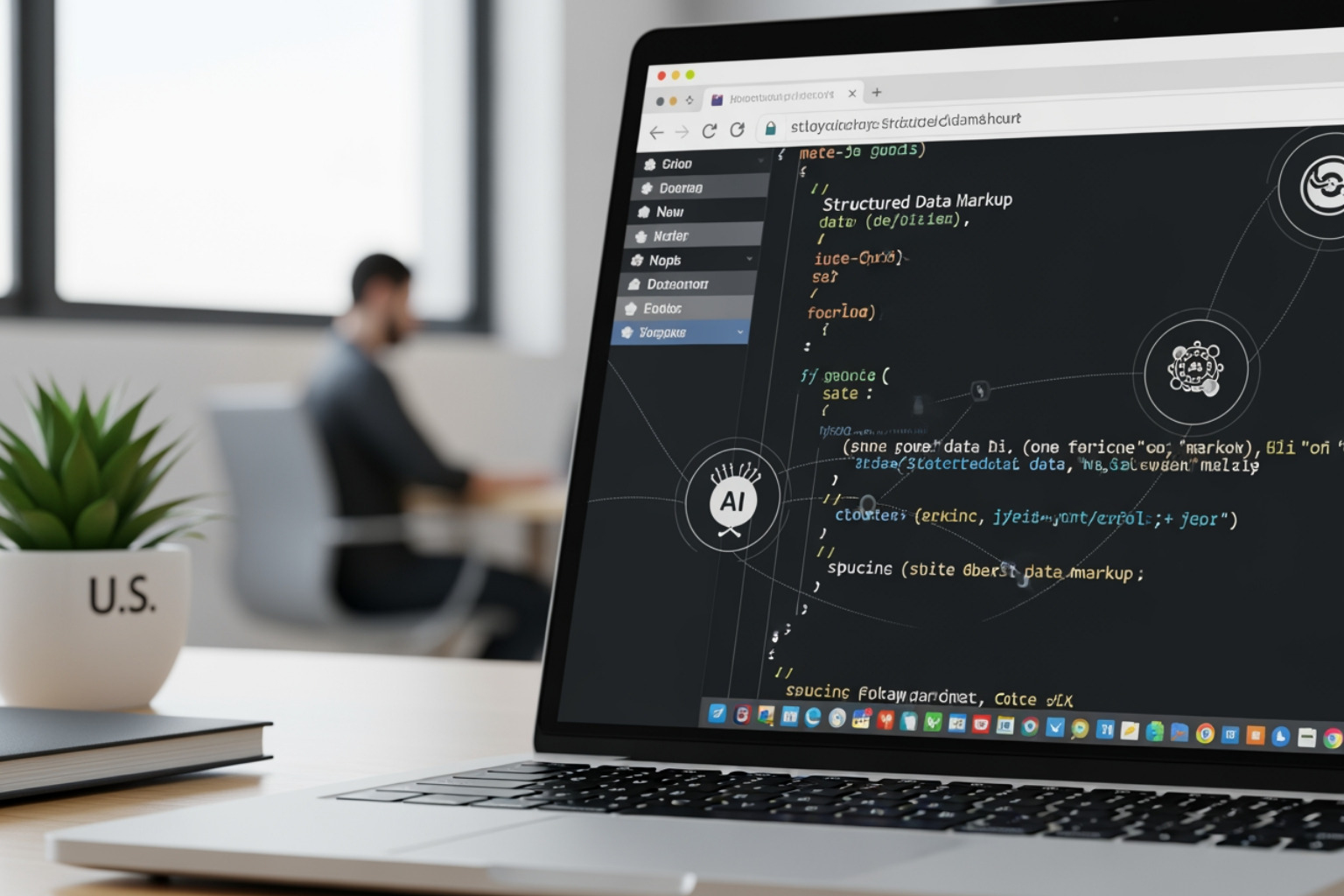
- Structured Data: Using FAQPage and HowTo schema provides a 3.7x citation lift.
- Comparison Tables: These are the “holy grail” for AI engines looking to summarize options for users.
Is traditional SEO still necessary in 2026?
Absolutely. GEO is “SEO plus,” not a replacement. In fact, 99% of AI Overviews cite pages that already rank in the organic top 10. You still need a strong foundation of traditional SEO, which is why we recommend a hybrid strategy. SEO is a long-game investment that requires 12-18 months to truly mature, providing the authority that generative engines then use to justify citing you.
Conclusion
The search landscape has fundamentally changed, and the generative engine optimization statistics we’ve reviewed today prove that the “Click Era” is evolving into the “Citation Era.” For businesses, staying visible means more than just ranking on page one—it means being the trusted source that AI engines rely on to answer their users’ questions.
At Dietz Group, we bring 18+ years of expertise and cutting-edge AI technology to help you navigate this transition. We don’t just optimize for keywords; we build high-ROI strategies focused on high-intent searches. While traditional SEO results take 12-18 months to fully realize, starting your GEO journey today ensures you aren’t left behind as AI continues to rewrite the rules of discovery.
Ready to claim your share of the AI search market? Connect with our Local Generative Engine Optimization Agency today, and let’s start building your brand’s authority in the age of answer engines.